
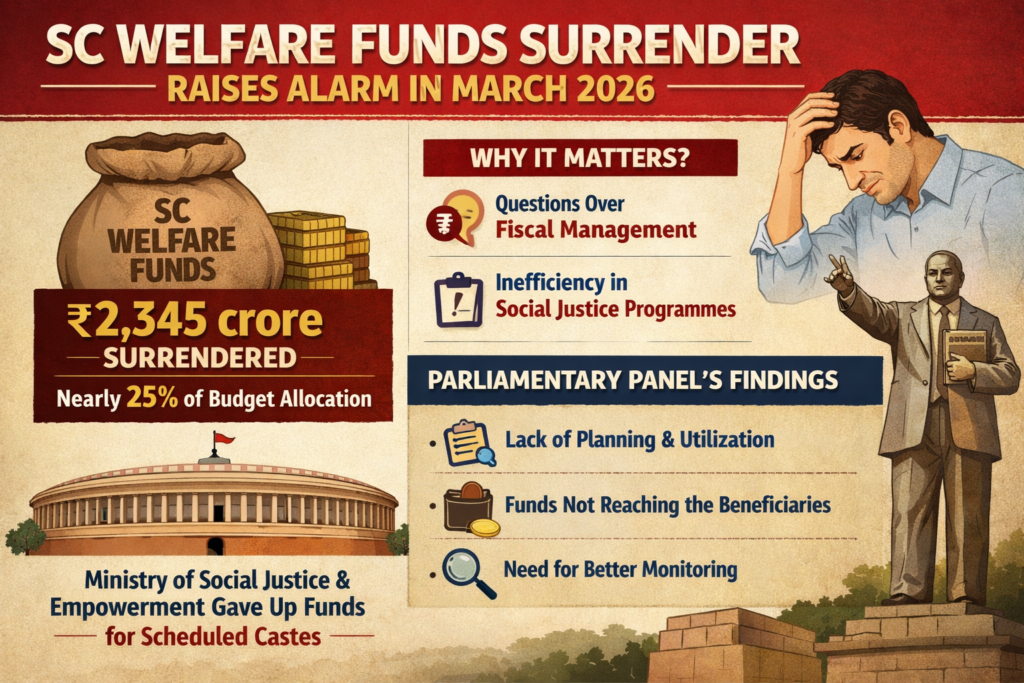
SC welfare funds is central to this update. SC welfare funds surrender has raised questions over the utilisation of ₹2,345 crore and implementation gaps. The development matters because it helps readers understand the immediate significance, broader policy context, and what may happen next.
- What are the key details of the SC welfare funds surrender in 2026?
- Why has the parliamentary panel questioned the SC welfare funds spending?
- How does the SC welfare funds surrender impact beneficiaries and eligibility?
- What comparisons exist between current and past SC welfare funds utilisation?
- What are the key reasons behind the surrender of SC welfare funds in 2026?
- What happens next for SC welfare funds post the 2026 parliamentary alert?
- What should beneficiaries and stakeholders do regarding SC welfare funds updates?
SC welfare funds: what happened
The parliamentary standing committee for social justice and empowerment flagged the surrender of ₹2,345 crore SC welfare funds by the Ministry of Social Justice and Empowerment in March 2026. This amount represents almost one-fourth of the total funds sanctioned during this fiscal year. Moreover, the ministry scaled down its budget allocation by nearly 30% at the revised estimates stage. Despite the already reduced budget, full utilisation of funds remains elusive. Such fiscal decisions have sparked questions regarding the ministry’s capacity to effectively deploy resources designed to aid Scheduled Castes across India.
Why has the parliamentary panel questioned the SC welfare funds spending?
The parliamentary panel describes the surrender of SC welfare funds as "incomprehensible", highlighting concerns over fiscal mismanagement. The ministry’s consistent underutilisation of allocated budgets, despite reductions, points to inefficiencies in scheme implementation. Such concerns stem from prior years too, where delays and procedural bottlenecks hindered disbursement. Additionally, withdrawing sizeable amounts unspent jeopardises the welfare of Scheduled Castes, who depend heavily on government support. Consequently, the committee urges a detailed review of spending patterns and strategic corrective actions.
How does the SC welfare funds surrender impact beneficiaries and eligibility?
The SC welfare funds primarily support education, skill development, and livelihood programmes benefiting over 20 million Scheduled Castes individuals nationwide. The surrender of ₹2,345 crore risks delaying or reducing these benefits in 2026-27. Eligibility criteria remain unchanged, targeting SC communities under various central schemes such as the Post-Matric Scholarship and National Scheduled Castes Finance and Development Corporation programmes. However, a drop in available funds may reduce approved beneficiary numbers or stall rollout of new initiatives, directly affecting vulnerable groups dependent on timely assistance.
What comparisons exist between current and past SC welfare funds utilisation?
A comparison with previous fiscal years reveals a recurring trend of fund surrender and underutilisation within the Social Justice ministry. For instance, in 2024-25, about ₹1,800 crore was surrendered despite the pressing need for welfare allocation. However, the 2026 surrender figure of ₹2,345 crore marks a major surge, indicating worsening fund utilisation. Globally, such inefficient spending is rare among welfare ministries, suggesting systemic challenges. The ministry's budget cutbacks at revised estimates by around 30% also contrast with rising demands for SC support, highlighting a growing mismatch in policy and execution.
What are the key reasons behind the surrender of SC welfare funds in 2026?
Several factors contribute to the SC welfare funds surrender, including administrative delays, procedural complexities, and insufficient field-level coordination. Scheme implementation has faced impediments like delayed approvals and lack of awareness among beneficiaries. Moreover, the ministry's repeated cuts at revised budget estimates reflect conservative fiscal planning or shifting priorities. These issues collectively cause underutilisation despite clear demand. As a result, Scheduled Castes welfare programmes face risk of stagnation, undermining social equity goals. The parliamentary panel stresses urgent reforms to address these root causes.
What happens next for SC welfare funds post the 2026 parliamentary alert?
Following the parliamentary alert, the Ministry of Social Justice and Empowerment is expected to enhance monitoring mechanisms for SC welfare funds. Immediate steps include improving fund disbursement timelines and increasing grassroots outreach to ensure beneficiary coverage. The government may revise budgetary provisions in the upcoming financial year to align allocations better with realistic utilisation capacities. Additionally, independent audits and progress reports must improve transparency. These measures aim to minimise future fund surrenders and boost scheme effectiveness, ensuring Scheduled Castes receive intended benefits without financial shortfalls.
What should beneficiaries and stakeholders do regarding SC welfare funds updates?
Beneficiaries and stakeholders should closely monitor official announcements from the Ministry of Social Justice and Empowerment for updates on scheme status. Applying promptly to schemes and following up with local authorities helps ensure enrolment before funds exhaust. Stakeholders, including NGOs and community organisations, can assist by raising awareness about eligibility criteria and application procedures. Furthermore, engagement in public consultations enhances accountability. As per parliamentary recommendations, active demand generation and feedback mechanisms are crucial to prevent fund underutilisation and ensure Scheduled Castes welfare gains momentum.
Frequently Asked Questions
What is the significance of the SC welfare funds surrender?
The surrender of ₹2,345 crore SC welfare funds signals underutilisation of allocated resources, impacting Scheduled Caste welfare programmes and raising concerns on fiscal management.
How does the SC welfare funds surrender affect beneficiaries?
Beneficiaries may face delays or reduced access to education, skill development, and financial aid schemes due to lower disbursal of SC welfare funds.
When did the parliamentary panel raise concerns about SC welfare funds?
The parliamentary standing committee flagged concerns in March 2026, highlighting consistent underutilisation and surrender of SC welfare funds.
Who oversees the utilisation of SC welfare funds?
The Ministry of Social Justice and Empowerment manages SC welfare funds, while the parliamentary panel monitors fiscal accountability and programme effectiveness.
What actions are recommended to improve SC welfare funds utilisation?
Recommendations include enhancing fund monitoring, streamlining approvals, raising beneficiary awareness, and revising budget estimates for improved utilisation.
Related Coverage on PolicyPulse Media
- Variable rate repo 2026: RBI’s crucial 7-day auction to boost
- Premature redemption SGB 2026: crucial redemption price surge
- Banks write off loans worth ₹9.75 lakh cr in 11 years:
Source: ET. This article is an independent editorial analysis by PolicyPulse Media and is not affiliated with the source organisation.
SC welfare funds: why this matters
SC welfare funds matters because it shapes how readers, institutions, investors, regulators, or businesses interpret the broader significance of the update.
SC welfare funds: what to watch next
What happens next after SC welfare funds will depend on follow-up disclosures, implementation steps, official clarification, and any measurable response from markets or institutions.
SC welfare funds: practical implications
In practical terms, SC welfare funds helps readers understand what changes immediately, what remains uncertain, and what signals to monitor over the near term.
Frequently asked questions
Why is SC welfare funds important?
SC welfare funds is important because it explains the broader significance of the announcement, order, market move, or policy change described in the article.
What should readers monitor after SC welfare funds?
Readers should monitor official statements, implementation steps, regulatory follow-up, and any measurable market or institutional response after SC welfare funds.