
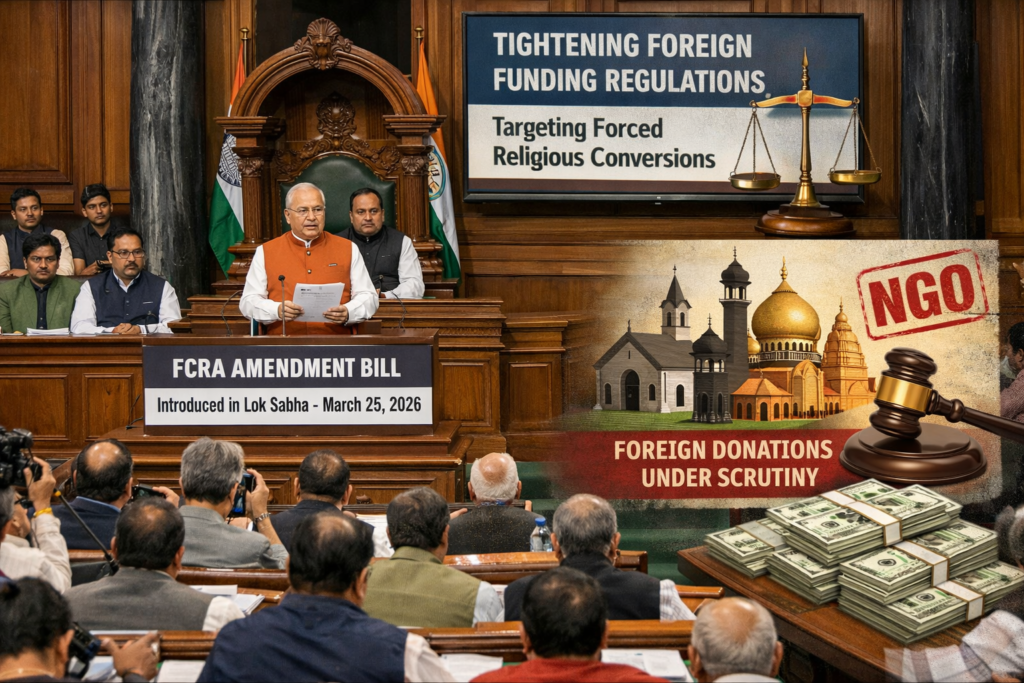
The FCRA amendment bill was introduced in the Lok Sabha on March 25, 2026, aiming to tighten regulations around foreign contributions. The bill targets individuals and organisations allegedly involved in forced religious conversion financed through foreign funding. This move carries considerable implications for NGOs, religious groups, and civil society actors who depend on foreign donations and highlights the government’s focus on transparency and preventing misuse.
What happened
On March 25, 2026, the Union government introduced the Foreign Contribution (Regulation) Amendment Bill in the Lok Sabha. The bill proposes stricter oversight and more stringent conditions on foreign contributions, particularly targeting those accused of using these funds for forced religious conversions. Union Minister of State for Home, Nityanand Rai, clarified that the amendment aims to ensure proper utilisation of foreign funds and enhance transparency within organisations receiving foreign support. The government underscored that the bill will not tolerate any abuse of foreign contributions for religious conversion or personal gain.
Key provisions of the FCRA amendment bill
The FCRA amendment bill 2026 introduces multiple regulatory enhancements. Firstly, it strengthens monitoring mechanisms to track foreign funding, particularly involving NGOs and religious bodies. Secondly, it explicitly criminalises the use of foreign funds for forced or coerced religious conversions, with penalties for violations. Thirdly, it mandates stricter reporting and compliance requirements, compelling recipient organisations to disclose detailed expenditure and funding sources. The bill’s enactment timeline remains subject to parliamentary approval, with anticipated implementation slated for late 2026 following necessary internal procedures.
Why the FCRA amendment bill matters
This amendment matters because it responds to ongoing concerns about the misuse of foreign funds to influence India’s socio-religious landscape. Critics argue that foreign funding in some instances facilitates forced conversions and political agendas, undermining social cohesion. By tightening provisions, the government seeks to safeguard national security and uphold the secular fabric. Meanwhile, supporters point out the need to balance transparency with protecting legitimate NGO activities. Thus, the bill has stirred debate on civil liberties, foreign influence, and regulatory oversight, marking a critical policy juncture in India’s foreign funding governance.
Who is affected by the FCRA amendment bill
The amendment primarily impacts NGOs, religious organisations, charitable trusts, and civil society groups that depend on foreign donations. Those involved in religious or social work risk facing enhanced scrutiny under the new provisions. Foreign donors may also encounter tighter requirements, including clear end-use declarations. Beyond organisations, beneficiaries of charitable activities could experience operational delays if fund transfers slow. Critics from opposition parties and human rights advocates warn that the bill may be used to target dissenting voices and curtail legitimate activities under security pretexts.
Context and background of the FCRA amendment bill
The Foreign Contribution (Regulation) Act was first enacted in 2010 to regulate foreign donations and prevent misuse. That said, over the years, authorities raised concerns about loopholes allowing foreign contributions to facilitate political agendas and religious conversions. Prior amendments in 2020 and 2022 increased compliance checks but faced criticism for excessive restrictions. The 2026 bill follows this trajectory with a clear focus on combating forced religious conversions funded from abroad. This legislative tightening reflects the government’s continuing priority on national security and cultural preservation amid evolving domestic and international realities.
Implementation timeline of the FCRA amendment bill
Following its introduction in the Lok Sabha, the FCRA amendment bill will undergo parliamentary scrutiny, debates, and possible revisions before a vote. If passed, it will be sent to the Rajya Sabha for approval. The government plans for the bill to be enacted within 2026, allowing agencies time to update procedures and notify affected entities. In practice, affected organisations should monitor official notifications and prepare for increased compliance and reporting requirements, expected to come into force within months of enactment.
Practical implications for NGOs and donors
NGOs and religious organisations relying on foreign funds must enhance their compliance frameworks to meet the new FCRA requirements. This involves detailed record-keeping, transparent disclosure of fund utilisation, and avoiding any activities linked to forced religious conversion. Foreign donors should conduct due diligence to ensure their contributions comply with these tightened norms. Meanwhile, organisations should prepare for more frequent audits and potential delays in fund approvals. Legal advisory services and internal process reviews will become essential to navigate the stricter regulatory environment introduced by the FCRA amendment bill.
Frequently Asked Questions
Does the FCRA amendment bill ban all foreign funding?
No, the bill does not ban foreign funding altogether but imposes stricter regulations and bans the use of foreign funds for forced religious conversions.
Who will enforce the new provisions of the FCRA amendment bill?
The Ministry of Home Affairs and designated regulatory authorities will oversee enforcement and compliance under the amended FCRA provisions.
Related coverage
- Repo Rate Cuts in 2025 Fail to Fully Reflect in Bank Deposits by 2026
- Variable Rate Repo auctions ease ₹1.25 lakh crore liquidity in FY2026 end
- Iranian Oil India Imports Face Cautious Reception Amid 2026 Payment Hurdles
Source: ET. Independent analysis by PolicyPulse Media.