
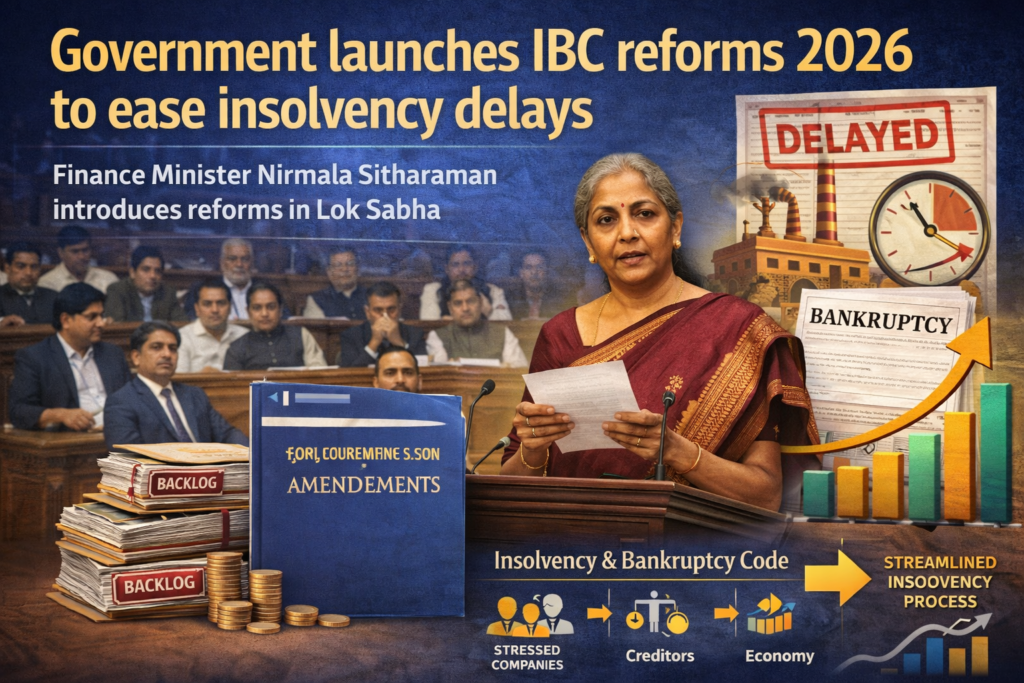
The government has introduced IBC reforms 2026 to address prolonged delays in the insolvency resolution process. Finance Minister Nirmala Sitharaman tabled a bill in the Lok Sabha to amend the Insolvency and Bankruptcy Code, which has struggled with backlogs and procedural delays over the last decade. These changes aim to streamline insolvency proceedings, benefiting stressed companies, creditors, and the broader economic environment by speeding up resolution and liquidation.
- What happened: Lok Sabha introduces IBC reforms 2026
- Key provisions and numbers in the IBC reforms 2026
- Why IBC reforms 2026 matter for India’s insolvency ecosystem
- Who is affected by the IBC reforms 2026
- Context: The evolution of insolvency laws in India
- Implementation timeline and what to watch
- Practical implications of IBC reforms 2026
What happened: Lok Sabha introduces IBC reforms 2026
Finance and corporate affairs minister Nirmala Sitharaman presented the Insolvency and Bankruptcy Code (Amendment) Bill in the Lok Sabha, marking a new phase for India’s insolvency framework. The proposed amendments seek to shorten timelines for resolution processes and improve adjudicatory efficiency, targeting criticism that the IBC has led to protracted delays since its enactment in 2016. The bill also includes enhanced provisions for adjudicating insolvency cases and improving the role and responsibilities of insolvency professionals.
Key provisions and numbers in the IBC reforms 2026
The IBC reforms 2026 propose reducing the maximum insolvency resolution timeline from 330 days to 180 days, excluding any litigation-related delays. The bill also introduces stricter deadlines for submission of resolution plans and streamlines appeal mechanisms by tightening the roles of the National Company Law Tribunal (NCLT) and the National Company Law Appellate Tribunal (NCLAT). On top of that, the amendments enhance creditor protections and propose penalties for delays caused by certain stakeholders. Collectively, these measures aim to cut procedural bottlenecks and enhance overall efficiency.
Why IBC reforms 2026 matter for India’s insolvency ecosystem
IBC reforms 2026 matter because insolvency delays have suppressed credit recovery, hurt investor confidence, and prolonged the uncertainty faced by creditors and operational stakeholders. By cutting timelines, creditors can expect faster liquidation or resolution, which is critical amid a stressed global economic environment affecting Indian businesses. The reforms also promote better compliance and accountability for insolvency professionals, potentially reducing frivolous litigation and procedural abuse. These structural changes are poised to support India’s aim to improve its Ease of Doing Business ranking.
Who is affected by the IBC reforms 2026
Corporates facing insolvency, creditors including banks and financial institutions, insolvency professionals, and investors are directly impacted by the IBC reforms 2026. Borrowers undergoing resolution can expect faster outcomes, while banks and non-banking financial companies (NBFCs) stand to recover dues more swiftly. Insolvency professionals will operate under clearer timelines and responsibilities, reducing uncertainty in the process. On top of this, operational creditors such as suppliers and employees will benefit from quicker liquidation, securing payments that have been delayed under earlier frameworks.
Context: The evolution of insolvency laws in India
Since its enactment in 2016, the Insolvency and Bankruptcy Code has been an ambitious effort to streamline insolvency resolution in India. That said, recurring delays due to overloaded tribunals, litigative tactics, and complex procedural safeguards have hampered its effectiveness. Earlier amendments focused on broadening the applicability and improving creditor rights, but procedural delays persisted. The 2026 reforms aim to resolve these systemic inefficiencies by curbing excessive litigation and clarifying stakeholders’ roles, building on prior changes such as the 2020 amendment which introduced pre-packaged insolvency processes for MSMEs.
Implementation timeline and what to watch
The bill is currently under consideration in the Lok Sabha, with expectations of passage in the coming months during the 2026 parliamentary session. Once passed, the government may notify the effective dates for different provisions, likely rolling out key timeline reductions within six months to a year. Stakeholders should watch for detailed implementation guidelines from the Insolvency and Bankruptcy Board of India (IBBI) as well as procedural changes at the NCLT and NCLAT levels. Early adoption by tribunals and insolvency professionals will be crucial to achieving the intended reduction in insolvency delays.
Practical implications of IBC reforms 2026
For corporate debtors, the reforms signal a need to prepare for faster resolution timelines, including quicker submission and approval of resolution plans. Creditors should monitor ongoing cases for procedural changes and heightened enforcement of deadlines. Insolvency professionals must adapt to stricter accountability and complete their duties within the redefined timelines. Investors and potential buyers can anticipate a more predictable insolvency process, facilitating informed decision-making on distressed asset acquisitions. Overall, the IBC reforms 2026 aim to inject much-needed efficiency and certainty into India’s insolvency regime.
Frequently Asked Questions
What is the primary objective of the IBC reforms 2026?
The primary objective is to reduce procedural delays in insolvency resolution and liquidation timelines by streamlining processes and tightening deadlines under the Insolvency and Bankruptcy Code.
Who benefits most from the IBC reforms 2026?
Creditors, including banks and operational creditors, benefit from faster recovery processes. Corporate debtors also gain from quicker resolution, reducing deadweight losses during insolvency.
Related coverage
- LPG allocation 2026 rises to 70% as Centre ensures fuel security amid West Asia tensions
- Jewar airport jobs set to rise as Noida International Airport expands hiring in 2026
- RBI launches Payments Vision 2028 with 15 initiatives to boost digital payments
Source: ET. Independent analysis by PolicyPulse Media.