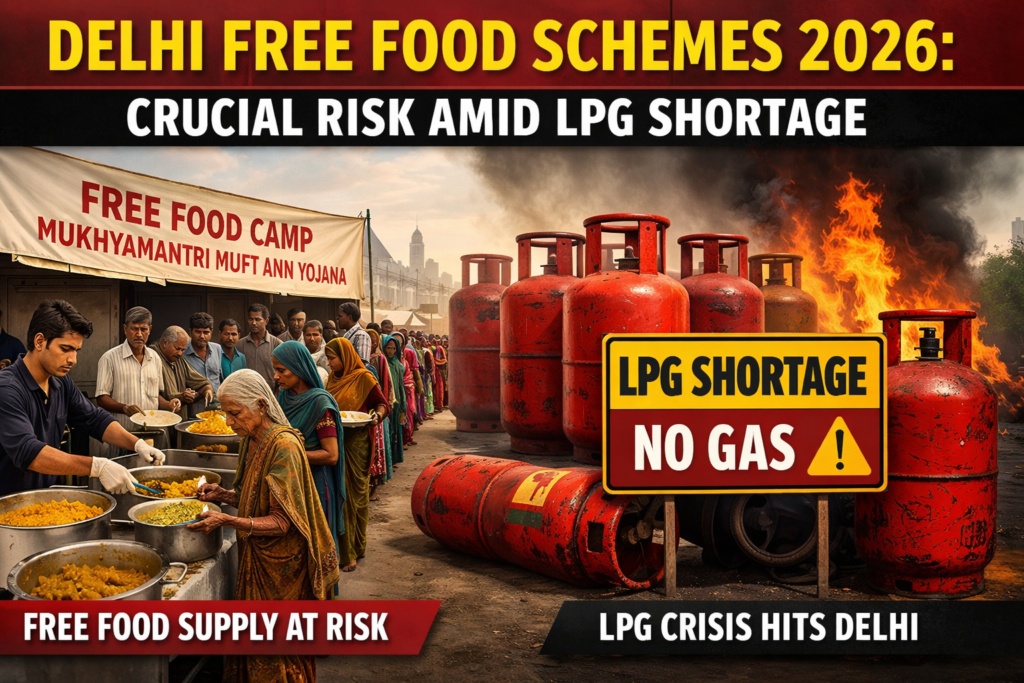
Delhi free food schemes 2026 is central to this update. Delhi free food schemes 2026 face pressure as LPG shortage concerns raise questions about supply and implementation. The development matters because it helps readers understand the immediate significance and what may happen next.
- How do Delhi free food schemes continue amid LPG shortage?
- What does the LPG shortage mean for Delhi free food schemes?
- What are the key operational strategies of Delhi free food schemes amid the crisis?
- Who are the major beneficiaries of Delhi free food schemes during LPG disruption?
- How do Delhi free food schemes compare to other food sectors in the LPG shortage?
- What is the outlook for Delhi free food schemes amid ongoing LPG supply challenges?
- What should citizens know about Delhi free food schemes and LPG shortages?
Delhi free food schemes 2026: what happened
Delhi free food schemes maintain steady daily food distribution despite the commercial LPG supply halt since early March 2026. Key players include the Atal Canteens and school mid-day meal programmes, which rely on centralized kitchens using steam-based cooking technology, reducing LPG dependency. For instance, Atal Canteens in Lajpat Nagar serve about 1,000 meals daily, prepared remotely in Mohan Estate. Government officials conduct ongoing assessments, ensuring that these services cater to over two million individuals, buffering the impact of LPG disruptions caused by Middle East supply shocks. Consequently, the schemes’ reliance on strategic fuel reserves and innovative cooking methods safeguards uninterrupted service.
What does the LPG shortage mean for Delhi free food schemes?
The LPG shortage poses a significant risk to Delhi free food schemes, with the potential to create 'operational challenges' if prolonged. Atal Canteens largely avoid cylinder use through centralized kitchens like the Ghitorni facility that employ steam-based technology. In contrast, private restaurants risk closure due to total LPG cylinder suspension. In addition, NGOs working alongside government bodies perform situational evaluations to anticipate resource needs amid this crisis. Given that over two million low-income beneficiaries depend on these schemes, any disruption could affect food security, nutrition, and daily welfare, making strategic planning essential for continuity.
What are the key operational strategies of Delhi free food schemes amid the crisis?
Delhi free food schemes use innovative operational strategies to counter LPG scarcity. The separation of cooking and serving points minimizes onsite fuel needs, exemplified by Atal Canteens’ remote kitchens in Mohan Estate and Ghitorni. Steam-based preparation technologies replace LPG cylinders, ensuring consistent meal output. Moreover, government and NGO partners maintain fuel reserves for emergency use, enhancing resilience. Compared to the broader hospitality sector’s shutdown, these schemes demonstrate adaptive capacity with over two million beneficiaries protected. Implementation of centralised steam infrastructure indicates a shift towards sustainable models in public food provision during fuel supply shortages.
Who are the major beneficiaries of Delhi free food schemes during LPG disruption?
Over two million beneficiaries benefit daily from Delhi free food schemes amid the LPG disruption, primarily comprising schoolchildren receiving midday meals and low-income workers supported by Atal Canteens. These groups rely heavily on government-subsidised nutrition to sustain livelihoods and education. The schemes’ continuity ensures food security for vulnerable populations during an economic strain that also causes a hospitality sector contraction. In contrast, private restaurant patrons face service disruption and price surges. Therefore, these free food programmes serve as critical social safety nets and help mitigate inflationary food pressures for disadvantaged communities.
How do Delhi free food schemes compare to other food sectors in the LPG shortage?
Compared to Delhi’s broader hospitality sector, which faces closures due to LPG cylinder shortages, Delhi free food schemes maintain stable operations. Most commercial restaurants in the city have suspended services amid the ongoing fuel crisis originating from Middle East supply disruptions. In contrast, Atal Canteens and school midday meal programmes leverage centralized kitchens with steam-based infrastructure, reducing LPG dependency markedly. This difference highlights the effectiveness of specialized operational models in public food provision. Whereas the hospitality industry risks job losses and inflationary pressures, free food schemes continue to serve over two million beneficiaries uninterrupted, demonstrating policy resilience.
What is the outlook for Delhi free food schemes amid ongoing LPG supply challenges?
The outlook for Delhi free food schemes remains cautiously optimistic amid ongoing LPG supply challenges. Government officials suggest that despite potential operational hurdles, services are unlikely to stop entirely. Continuous situational monitoring and fuel reserve management underpin this stance. However, an extended LPG shortage could strain logistics and increase operational costs. Therefore, policymakers are exploring alternative energy sources and increasing infrastructure investments for scalable steam-based cooking. These adaptations aim to future-proof free food schemes and secure services for over two million beneficiaries, even as LPG market volatility persists due to geopolitical factors impacting global fuel supplies.
What should citizens know about Delhi free food schemes and LPG shortages?
Citizens relying on Delhi free food schemes should remain informed about the schemes’ robust operational status despite the LPG shortage. With centralized kitchens and steam cooking, services at Atal Canteens and school meal programmes continue, protecting vulnerable populations. However, stakeholders should prepare for possible minor disruptions should the crisis deepen. Users can support these initiatives by sharing information and reporting localized issues. Additionally, awareness about government fuel reserve policies and NGO involvement helps reinforce community trust. For complete details, refer to official government releases and verified media sources tracking the LPG shortage impact.
Frequently Asked Questions
What is the impact of LPG shortage on Delhi free food schemes?
The LPG shortage challenges Delhi free food schemes by limiting fuel availability, but centralized steam kitchens and fuel reserves enable continued meals for over two million beneficiaries.
How do Atal Canteens manage cooking during LPG disruptions?
Atal Canteens use centralized kitchens employing steam technology with minimal LPG cylinders, allowing uninterrupted meal preparation despite commercial LPG suspension.
Will midday meal programmes in Delhi stop due to LPG shortage?
Midday meal programmes continue without interruption as they rely on steam-based cooking infrastructure and fuel reserves, securing meals for schoolchildren.
Who benefits from Delhi free food schemes amid LPG crisis?
The schemes serve over two million beneficiaries daily, including low-income workers and students relying on government-subsidised meals for nutrition and livelihood support.
Related Coverage on PolicyPulse Media
- Auction of state government securities 2026: crucial ₹58,420
- Auction treasury bills 2026: crucial ₹34,000 crore auction to
- Digital payments awareness 2026: crucial launch boosts user alert
Source: ET. This article is an independent editorial analysis by PolicyPulse Media and is not affiliated with the source organisation.
delhi free food schemes: why this matters
delhi free food schemes matters because it helps readers understand the broader significance of the development and what it may mean next.
Delhi free food schemes 2026: why this matters
Delhi free food schemes 2026 matters because it clarifies the broader significance of the development and the likely implications for readers, institutions, markets, or policy.