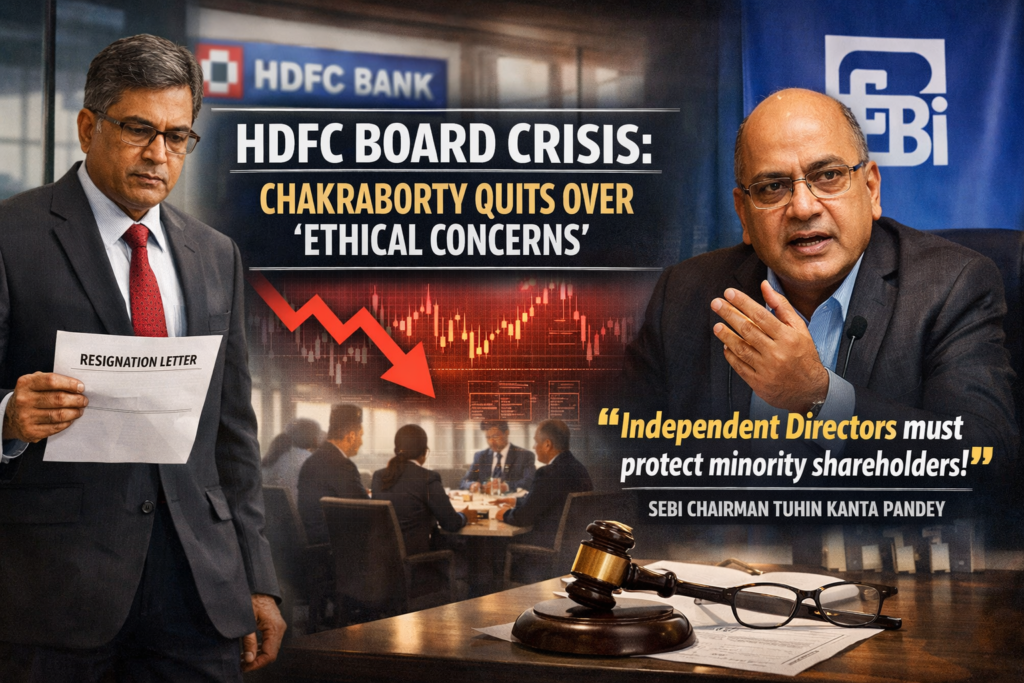
HDFC Bank independent directors is central to this update. HDFC Bank independent directors came under SEBI scrutiny after disclosure and governance questions linked to the chairman succession episode. The development matters because it helps readers understand the immediate significance, broader policy context, and what may happen next.
HDFC Bank independent directors: what happened
In March 2026, Atanu Chakraborty resigned as HDFC Bank’s non-executive chairman unexpectedly, citing concerns related to ethics and values within the bank's governance framework. This sudden move drew attention to the dynamics in the bank’s boardroom, especially concerning the role and conduct of independent directors. Subsequently, SEBI Chairman Tuhin Kanta Pandey addressed the issue publicly, stressing that independent directors must avoid unsubstantiated claims and discharge their duties responsibly.
Key SEBI directives on independent directors
SEBI’s explicit reminder came days after Chakraborty’s exit, underlining independent directors’ duty to protect minority shareholders. Pandey highlighted that individuals in these roles must exercise the highest diligence while balancing their oversight. Notably, SEBI expects independent directors to ensure transparency and uphold strong ethical standards, avoiding any claims unsupported by facts that could destabilise investor confidence or corporate governance.
Why this matters for HDFC Bank independent directors
The message from SEBI is a clear signal that independent directors of HDFC Bank must strengthen governance practices and prioritise minority shareholder protection. This matter resonates widely given the bank’s prominence in India’s financial sector and its influence on market stability. Failure to act responsibly risks both regulatory action and erosion of investor trust, which could impact HDFC Bank’s valuation and reputation amidst a growing focus on governance standards nationwide.
Who is affected by SEBI’s message
The immediate stakeholders impacted include HDFC Bank’s independent directors, minority shareholders, and the wider investor community. Independent directors face heightened expectations to be diligent and measured in their actions. Minority shareholders stand to benefit from increased protection and scrutiny of board decisions. Also, this development signals to other Indian banks and listed entities that SEBI may intensify oversight of board conduct going forward.
Context: Independent director role in Indian corporate governance
Independent directors are mandated under Indian corporate law and SEBI regulations to provide unbiased oversight and safeguard minority shareholders. Over recent years, SEBI has tightened norms around board composition, director responsibilities, and transparency due to corporate governance challenges in various sectors. The HDFC Bank episode underscores enduring governance sensitivities especially in large financial institutions, where boardroom ethics and alignment with shareholder interests remain paramount.
What to watch: Future regulatory and corporate governance trends
Going forward, market participants and regulators will closely monitor independent directors’ conduct at HDFC Bank and other major banks to gauge seriousness of SEBI’s message. The regulator may introduce stricter compliance mandates or enhanced disclosure norms for board-level activities. Investors should track developments around board meeting outcomes, resignation or appointment of directors, and any policy updates from SEBI that impact independent oversight in the financial sector.
Related coverage
- SEBI ICDR regulations 2026 tighten disclosure norms and ease capital raising
- PM Internship scheme eases rules for firms in 2026 to boost tech sectors
- West Asia conflict prompts PM Modi to review 2026 energy supply
Source: ET. Independent analysis by PolicyPulse Media.
HDFC Bank independent directors: why this matters
HDFC Bank independent directors matters because it shapes how readers, institutions, investors, regulators, or businesses interpret the broader significance of the update.
HDFC Bank independent directors: what to watch next
What happens next after HDFC Bank independent directors will depend on follow-up disclosures, implementation steps, official clarification, and any measurable response from markets or institutions.
HDFC Bank independent directors: practical implications
In practical terms, HDFC Bank independent directors helps readers understand what changes immediately, what remains uncertain, and what signals to monitor over the near term.
Frequently asked questions
Why is HDFC Bank independent directors important?
HDFC Bank independent directors is important because it explains the broader significance of the announcement, order, market move, or policy change described in the article.
What should readers monitor after HDFC Bank independent directors?
Readers should monitor official statements, implementation steps, regulatory follow-up, and any measurable market or institutional response after HDFC Bank independent directors.
HDFC Bank independent directors: broader context
The broader context around HDFC Bank independent directors matters because similar developments can influence confidence, policy expectations, compliance behaviour, institutional decision-making, or market interpretation beyond the headline event itself. This added context helps make the article more useful and more distinctive.
HDFC Bank independent directors are central to this issue because independent directors are expected to provide governance oversight, protect institutional credibility, and ensure that major leadership transitions are handled with adequate transparency. When a regulator raises questions in such a context, the issue goes beyond a single disclosure and touches the quality of board oversight itself.
This is why the development has drawn attention from investors and governance watchers. In large financial institutions, succession-related communication can materially affect confidence, interpretation of board processes, and the broader perception of governance standards. That makes the scrutiny around HDFC Bank independent directors relevant not only to shareholders, but also to depositors and market participants trying to assess institutional stability.
From a search and reader perspective, this topic also needs clearer explanation than a headline alone can provide. The reason HDFC Bank independent directors matter here is that they sit at the intersection of regulatory expectations, disclosure discipline, and board accountability. Readers following the issue will want to understand whether the warning leads to governance improvements, further clarification, or no larger operational consequence.