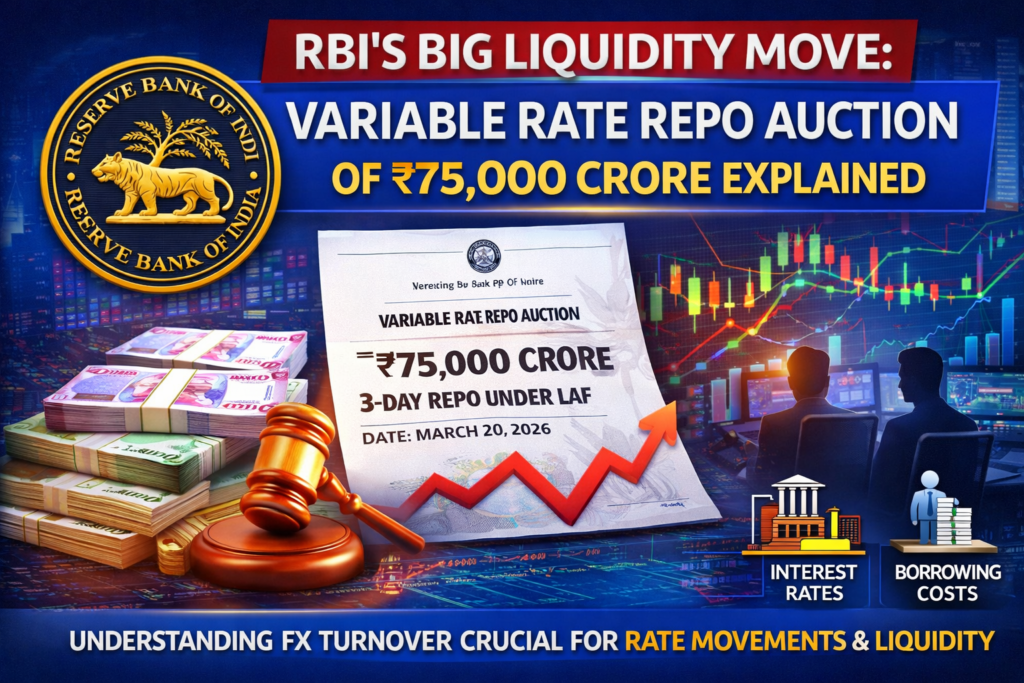
variable rate repo is central to this update. Variable rate repo auction of ₹75,000 crore signalled RBI support for near-term liquidity conditions. The development matters because it helps readers understand the immediate significance, broader policy context, and what may happen next.
- What is the RBI variable rate repo auction scheduled for March 2026?
- Why has RBI opted for a variable rate repo auction in March 2026?
- What does the variable rate repo auction mean for borrowers and banks?
- How does the variable rate repo auction compare to RBI’s previous repo actions?
- When will the variable rate repo auction take effect and what is the timeline?
- What should banks, NBFCs, and borrowers do ahead of the RBI variable rate repo auction?
- What are the broader economic implications of the 2026 variable rate repo auction?
variable rate repo: what happened
The RBI variable rate repo auction will take place on March 20, 2026, with a notified amount of ₹75,000 crore. The auction will be conducted under the Liquidity Adjustment Facility (LAF) for a tenor of three days, with the window time from 9:30 AM to 10:00 AM. The repayment or reversal date is March 23, 2026. This auction is designed to inject liquidity into the banking system by providing short-term funds at a determined variable interest rate. According to RBI's official notification dated March 18, 2026, this move responds to current and evolving liquidity conditions that need immediate addressal.
Why has RBI opted for a variable rate repo auction in March 2026?
The RBI's decision to conduct a variable rate repo auction follows an assessment of the evolving liquidity scenario in March 2026. Previously, RBI has used variable rate repos to flexibly manage short-term money supply. This auction replaces fixed-rate repo instruments temporarily to better calibrate liquidity. In addition, it aligns with RBI’s broader monetary policy strategy to support banks with cost-effective funds during seasonal or cyclical tightness. Experts note that the ₹75,000 crore size matches typical auction levels in high-demand periods, aiming to stabilise funding markets and ensure smooth credit flow to the economy.
What does the variable rate repo auction mean for borrowers and banks?
The variable rate repo auction directly influences short-term interest rates, impacting loan rates for banks and NBFCs. With ₹75,000 crore liquidity injection on March 20, 2026, banks receive cheaper funds to lend out, potentially lowering borrowing costs. Borrowers benefiting include individuals with floating-rate EMIs, who may see interest rate relief if the RBI’s rates ease. However, the auction's variable rate means market-driven rates could fluctuate, adding an element of uncertainty in cost of funds. Moreover, NBFCs relying on bank funding are expected to gain better liquidity, supporting credit disbursals during this quarter-end period.
How does the variable rate repo auction compare to RBI’s previous repo actions?
Earlier in 2026, RBI conducted several fixed rate repo auctions under LAF with smaller amounts. The variable rate repo auction of ₹75,000 crore is a larger and flexible approach, allowing RBI to adjust rates dynamically based on bids. Compared to the last fiscal year, when variable rate auctions were less frequent, this action signals RBI’s willingness to use diverse tools to manage liquidity. Globally, central banks have also progressively preferred variable rate repos for managing transient liquidity shocks. This auction reinstates India's proactive stance in monetary operations, allowing markets greater participation and responsiveness.
When will the variable rate repo auction take effect and what is the timeline?
The variable rate repo auction opens on March 20, 2026, with bids accepted from 9:30 AM to 10:00 AM. The tenor is three days, ending on March 23, 2026, which is also the date when the amounts borrowed under this facility must be reversed. Banks must plan their liquidity needs accordingly to avoid any funding shortfalls by this date. The timing is critical as it coincides with month-end and quarter-end financial activity, a period typically marked by liquidity tightness. Stakeholders should monitor RBI notifications for any further auction schedules or changes.
What should banks, NBFCs, and borrowers do ahead of the RBI variable rate repo auction?
Banks and NBFCs need to prepare their bidding strategies to optimise the ₹75,000 crore variable rate repo auction. They should assess current funding gaps and liquidity forecasts to determine desired auction participation. Borrowers, especially those with floating rate loans, should watch the auction outcomes closely as it may impact interest rates on EMIs and FD yields. Financial advisors recommend reviewing loan agreements and planning refinancing if necessary. Moreover, businesses relying on short-term credit lines should anticipate possible rate movements post-auction, adapting cash flow plans accordingly.
What are the broader economic implications of the 2026 variable rate repo auction?
The variable rate repo auction represents a vital liquidity measure by RBI to prevent systemic liquidity shortfalls in March 2026. This helps maintain stable credit growth, supporting economic recovery amid global uncertainties. By tweaking liquidity injection volumes and terms, RBI signals a calibrated approach to monetary policy easing without triggering inflationary pressures. This auction may lead to strengthened banking sector balance sheets and improved investor confidence. According to financial analysts, the auction's success will influence RBI's policy trajectory in H1 2026, shaping interest rates, inflation outlook, and currency stability.
Frequently Asked Questions
What is the RBI variable rate repo auction?
The RBI variable rate repo auction is a liquidity management tool where banks borrow short-term funds at variable interest rates. The March 20, 2026 auction offers ₹75,000 crore for three days to adjust money supply.
How does the variable rate repo auction affect borrowers?
Borrowers with floating rate loans may experience changes in EMI rates as the auction influences short-term interest rates. The March 20, 2026 auction aims to ease lending costs by injecting ₹75,000 crore liquidity.
When will the RBI variable rate repo auction funds be reversed?
Funds borrowed under the March 20, 2026 variable rate repo auction must be repaid on March 23, 2026, after a three-day tenor.
Who can participate in the RBI variable rate repo auction?
Scheduled commercial banks and other eligible financial institutions under the Liquidity Adjustment Facility can participate in the variable rate repo auction conducted by RBI.
Why does RBI conduct variable rate repo auctions instead of fixed rate ones?
Variable rate repo auctions allow RBI to manage liquidity flexibly based on market demand and bids, helping better align short-term interest rates with evolving conditions.
Related Coverage on PolicyPulse Media
- Foreign exchange turnover data 2026: crucial surge in January
- Foreign exchange turnover data 2026: crucial RBI update
- RBI releases data 2026: crucial surge in ECB, FCCB and RDB
Source: RBI. This article is an independent editorial analysis by PolicyPulse Media and is not affiliated with the source organisation.
variable rate repo: why this matters
variable rate repo matters because it shapes how readers, institutions, investors, regulators, or businesses interpret the broader significance of the update.
variable rate repo: what to watch next
What happens next after variable rate repo will depend on follow-up disclosures, implementation steps, official clarification, and any measurable response from markets or institutions.
variable rate repo: practical implications
In practical terms, variable rate repo helps readers understand what changes immediately, what remains uncertain, and what signals to monitor over the near term.
Frequently asked questions
Why is variable rate repo important?
variable rate repo is important because it explains the broader significance of the announcement, order, market move, or policy change described in the article.
What should readers monitor after variable rate repo?
Readers should monitor official statements, implementation steps, regulatory follow-up, and any measurable market or institutional response after variable rate repo.