The RBI current account projection highlights strong support from India’s services exports and inward remittances for fiscal year 2026-27. According to the Reserve Bank of India’s Annual Report 2025-26, software and business service sectors, along with remittances from non-Gulf countries, will bolster the external sector. This trend matters for policymakers and businesses as it cushions India’s balance of payments amid global trade and geopolitical challenges that impact other economic channels.
- RBI current account outlook for FY27
- Key figures underpinning the RBI current account forecast
- Why the RBI current account outlook matters
- Stakeholders impacted by the RBI current account trajectory
- Context: Previous RBI views on external sector dynamics
- What to watch for in RBI current account updates
- Practical implications for businesses and policymakers
RBI current account outlook for FY27
The Reserve Bank of India’s Annual Report 2025-26 provides a detailed forecast of the external sector for FY27, emphasising the role of services exports and remittances in supporting the current account balance. The RBI expects robust growth in software and business services exports to continue, driven by persistent global demand and India’s competitive advantage in IT-enabled services. On top of this, steady remittances from Indian diaspora outside Gulf countries will add resilience. Despite ongoing global geopolitical tensions and uncertainties in goods trade, these inflows should offset pressures on the trade deficit and capital account volatility, cushioning the overall balance of payments.
Key figures underpinning the RBI current account forecast
The RBI report identifies software and business services as primary contributors to the expected current account balance support, although it does not specify precise export growth rates in the summary. Remittances, another pillar, are forecast to grow steadily, driven especially by workers in the US, Europe, and Asia-Pacific regions, offsetting slower inflows from Gulf countries. The fiscal year 2026-27 is therefore expected to see a more balanced external account compared to recent years marked by trade shocks and energy price volatility. This baseline assumes that global trade disruptions remain contained and that India’s service sector maintains its export momentum.
Why the RBI current account outlook matters
This RBI current account projection is pivotal as it signals stability in India’s external financing needs amidst heightened global economic uncertainty. Services exports and remittances act as automatic stabilisers, reducing dependence on volatile capital flows and commodity imports. For policymakers, this implies more room to navigate macroeconomic challenges without excessive currency volatility or forced adjustments in monetary policy. Businesses in export sectors can anticipate favourable demand conditions, while policymakers should consider reinforcing support to the services sector and diaspora engagement. Meanwhile, a stable current account reduces risks for banks and non-banking financial companies reliant on forex liquidity.
Stakeholders impacted by the RBI current account trajectory
Key stakeholders include exporters of IT and business services who benefit from sustained global demand and currency stability. Migrant workers and their families in non-Gulf countries also emerge as critical beneficiaries, as their remittances shore up foreign exchange inflows and domestic consumption. Financial institutions, including banks and NBFCs, require stable external sector conditions to manage forex exposures and lending rates. Policymakers must balance external sector policies with inflation and interest rate considerations, ensuring that monetary actions do not hamper export competitiveness. Also, exporters dependent on raw material imports face risks if commodity prices fluctuate, underscoring the importance of the RBI’s balanced external account outlook.
Context: Previous RBI views on external sector dynamics
Historically, the RBI has recognised the services sector as a key pillar of the external account, especially as India shifted from a goods trade surplus in the 2000s to persistent deficits offset by services exports and remittances. Amid recent West Asia conflicts and global supply chain disruptions, the RBI had cautioned about heightened risks to trade balances and volatile capital flows. The 2025-26 Annual Report’s view on FY27 highlights a cautiously optimistic shift, signalling resilience in services and remittances despite external headwinds. This contrasts with earlier years when merchandise trade had a more decisive influence on the current account, underscoring India's evolving economic structure.
What to watch for in RBI current account updates
Going forward, the RBI’s monthly and quarterly external sector data releases will provide clarity on actual performance against the FY27 projections. Key indicators include services export growth rates, remittance inflow trends, and trade balance fluctuations affected by global commodity prices. Policymakers should monitor geopolitical developments that may influence Gulf remittances as well as global IT demand cycles. The monetary policy committee’s stance on interest rates will also reflect RBI assessments of external sector health. Investors and exporters should track these signals to calibrate risk and opportunity amid an uncertain global economic landscape.
Practical implications for businesses and policymakers
Exporters of software and business services should prepare to leverage favourable global demand and currency conditions to expand market share in FY27. Firms reliant on remittance-driven domestic markets can expect steadier local consumption. Policymakers should continue enhancing digital infrastructure and bilateral ties with non-Gulf countries to sustain remittance flows. Banks and NBFCs need to factor stable current account forecasts into their forex risk management and lending frameworks. Meanwhile, close attention to trade deficit drivers remains crucial, as commodity price shocks could pressure the overall balance. The RBI’s current account outlook offers a useful guide, urging adaptive strategies for multiple economic actors.
Frequently Asked Questions
What is the significance of services exports in India’s current account?
Services exports, especially in software and business services, generate meaningful foreign exchange inflows that help offset India’s merchandise trade deficit, supporting a stable current account balance.
How do remittances impact India’s current account balance?
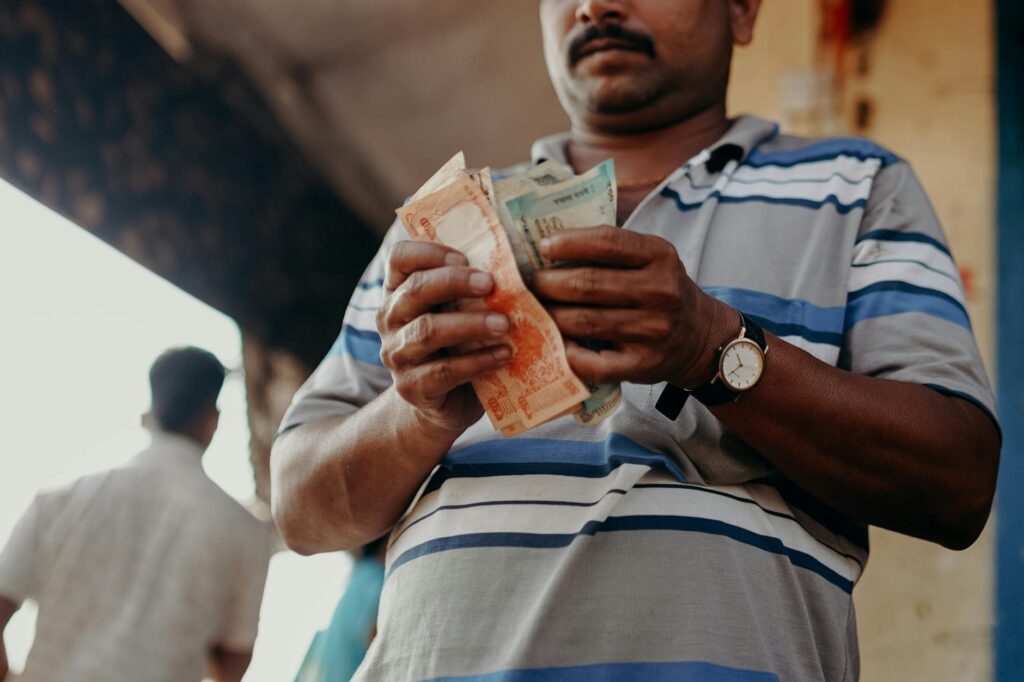
Remittances from Indians working abroad, particularly outside the Gulf region, provide a steady source of foreign exchange, bolstering the external sector and cushioning the current account against trade shocks.
Related coverage
- Foxconn growth momentum rises 19% in Q1 2026 due to soaring AI demand
- India GDP Q4 FY26 data 2026: मिला अहम आर्थिक वृद्धि का संकेत
- Rupee hits 99: 2026 में fiscal deficit 5% पार, बड़ा economic खतरा
Source: ET. Independent analysis by PolicyPulse Media.